
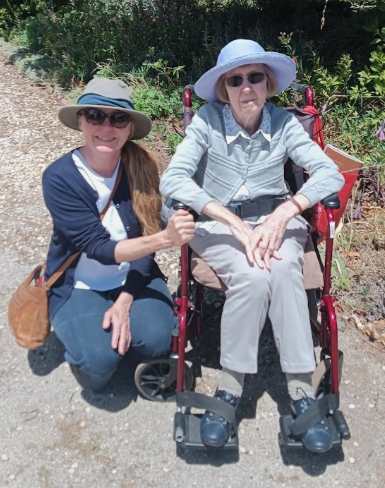
If you've ever looked at the big care providers and thought "there must be no room for me," I want to show you the exact opposite.
The big providers are everywhere. But here's the thing you might not have noticed: people are searching for something those providers don't offer.
The gap nobody's filling
Big providers run on rosters and rotation. Clients see a different face every week — a rotating cast of staff, each new person needing to be shown round, re-learn the routine, re-build the trust.
People don't want that. Families and clients want one person they can trust in their home. Someone consistent. Someone local. Someone honest. Someone who turns up, who knows the routine, who they feel safe with.
That's not a small thing. It's the thing that makes people choose one carer over another. And it's exactly what a local independent does naturally.
The money is in the work big providers skip
Here's the part that really opens the door, and it's especially true in rural and regional Australia.
Established providers often don't offer gardening, cleaning, meals and domestic assistance. Not because it's not needed — but because there's less money in it, and they can't find the staff. So they focus on the more lucrative socialisation and higher-rate work.
That leaves reliable, recurring domestic work unserved. And that's exactly the work a capable local, self-employed person does best. It's steady, it's wanted, and nobody else is doing it.
The big players skip it. You serve it.
What "local and reliable" actually buys you
When you're independent, you're not just another rostered worker. You get to:
- Build real relationships — you see the same people, you know their lives, you become part of their week.
- Control your own hours — fit work around school runs, family, life.
- Charge a fair rate and keep the margin — as your own business, your own effort is your own income.
- Be the trusted local name — word of mouth in a small town travels fast, in the best way.
This is why I always say the best opportunity for a new carer is to start close to home, do the simple things brilliantly, and build a reputation for being the person who actually turns up.
The honest requirement
I won't pretend it's effortless. To do this well you need the right checks and training — the NDIS Worker Screening Check (national — in TAS and ACT it's bundled into your RWVP / WWVP card), a police check and first aid, plus the NDIS Worker Orientation module and the aged care Code of Conduct training — and the business basics (an ABN) and the discipline to run it properly. But the barrier to start is genuinely low — no nursing degree, no big investment, just the heart you already have and the willingness to do it right.
Your next step
If this sounds like you, I've mapped out the first three steps — the honest starting picture with no hype.
Download my free training — see exactly how to start everyday support in your own town, and what it actually pays.
This is general information, not financial, legal or tax advice. Requirements change — verify current official information and see your accountant.