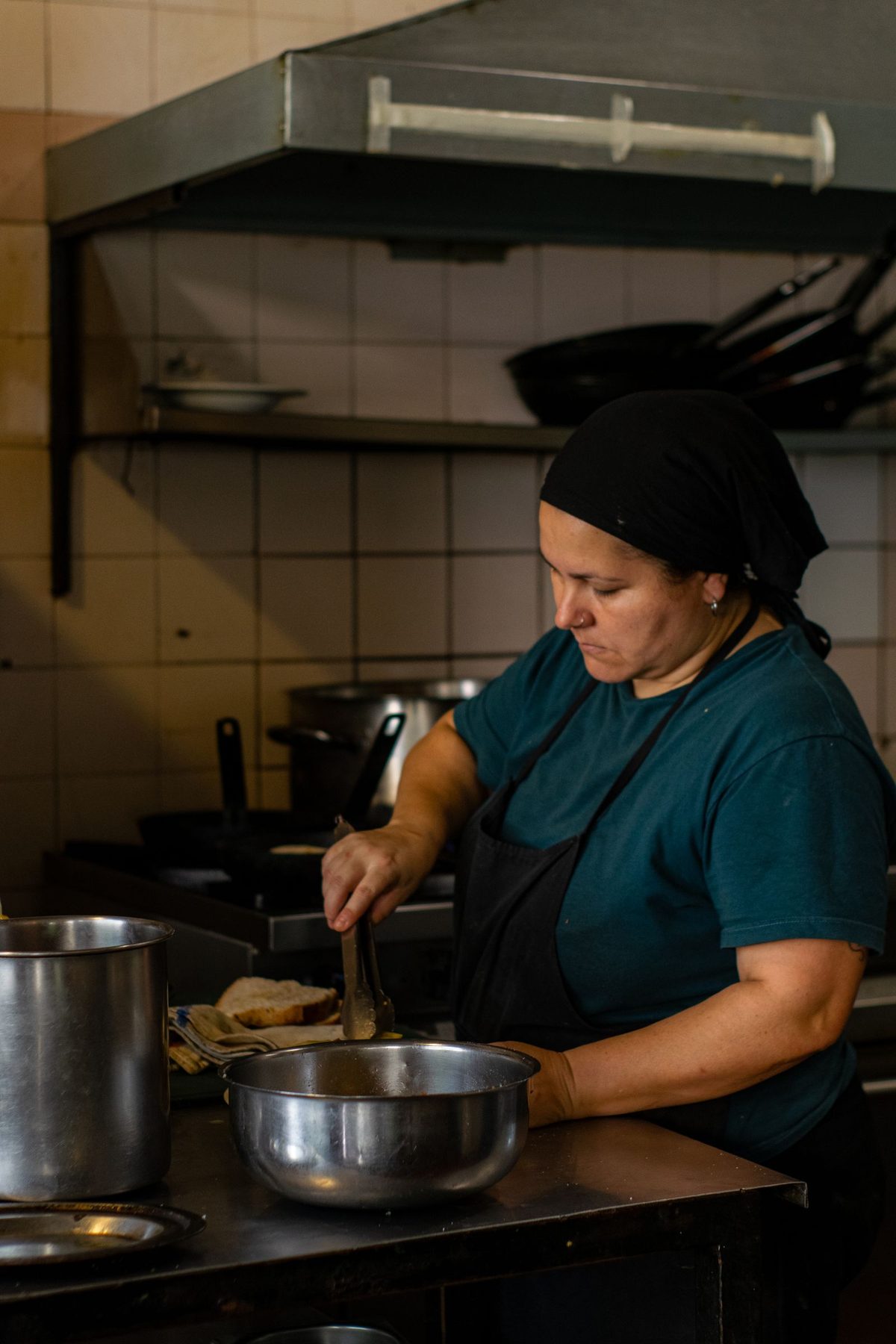
Same cooking. No split shifts, no 11pm close. $60.10 an hour.
If that's you, here it is straight: what the work actually involves, what it pays, what it costs to set up, and how to start — from someone running the same business, part-time, in regional Tasmania.
1. Out of the kitchen
Split shifts. A close at eleven and a start at six. Tickets coming faster than you can plate them, a kitchen at full noise, and someone yelling about the docket rail. This work is one person, one meal at a time, at their own table — and they thank you for it, which sounds small until you haven't heard it for a while.
2. $60.10 an hour for the cooking
That's the published NDIS price limit for household tasks — item `01_020_0120_1_1` — and that one item covers cleaning, laundry, meals and tidying. There is no separate "cooking" code, so cooking someone's meals bills at the same rate as cleaning their house. The same session can be the shop, the cook and the clean-up.
For comparison, the Hospitality Industry (General) Award pays a cook grade 2 $27.97 an hour from 1 July 2026 — cook grade 1 $27.08, and a tradesperson cook up to $32.13. That's before penalty rates, which is exactly what a split shift, a late close or a public holiday is for.
3. Nothing to buy — the kitchen's already there
The client has the oven, the pots, the plates and the bench. You might bring your favourite knife — I do, when I cook — but you probably already own the kit you'd want. So the setup is just an ABN, public liability insurance, a police check, a current first aid certificate and an NDIS Worker Screening Check. No commercial rent, no staff, no split shifts — and the ingredients are the client's, not yours.
4. The food isn't your cost
You're billing your time, not buying someone's groceries. In practice the ingredients are theirs — they supply them or pay for them, and if you do the shop as part of the support you keep the receipts and hand them over. The schedule does carry a separate line for the cost of the meals themselves (`01_023_0120_1_1`), and it's a cost item rather than an hourly rate: it covers the agreed cost of the food, or the client simply covers it themselves. Either way the shopping trip can be part of the support, and for a lot of clients the outing matters as much as the meal.
5. The part families are frightened of getting wrong
Allergies. Soft and texture-modified diets. Food safety, cross-contamination, a fridge that's actually safe. A cook who can hold a calm conversation about a modified diet is a different proposition from a well-meaning neighbour — and that's exactly what families are looking for and rarely find.
Where to go next
Two things worth knowing before you quote.
Household tasks carry no evening or weekend loading — a Saturday meal-prep session is the same $60.10 as a Tuesday one. The weekend rates belong to social and community participation, and cooking isn't billed as that.
And if you've seen around $97 an hour quoted for "meal preparation", that's the aged-care Support at Home table. An unregistered sole trader can't bill it directly — it needs provider registration, or going through a marketplace that takes its own cut. Don't build your plan on it. The rate above is the one open to you.
Being straight with you. The hourly figures on this page are the billing rates from the official NDIS Pricing Schedule — the most that can be charged for that support. They're gross revenue, not take-home. Insurance, tax, super, travel and your own time all come out of it. And the income examples are Cathy's real numbers, not a promise about yours.
The free training is below — the honest version of how this works, in plain language. It's free, and it stays free.
This is general information, not financial, legal or tax advice. Figures change — verify current official information and see your accountant.